

Dua Before Using the Toilet: Daily Manners for Children
Dua Before Using Toilet is a beautiful topic for families who want children to learn Islamic words with meaning, manners and a calm daily routine.
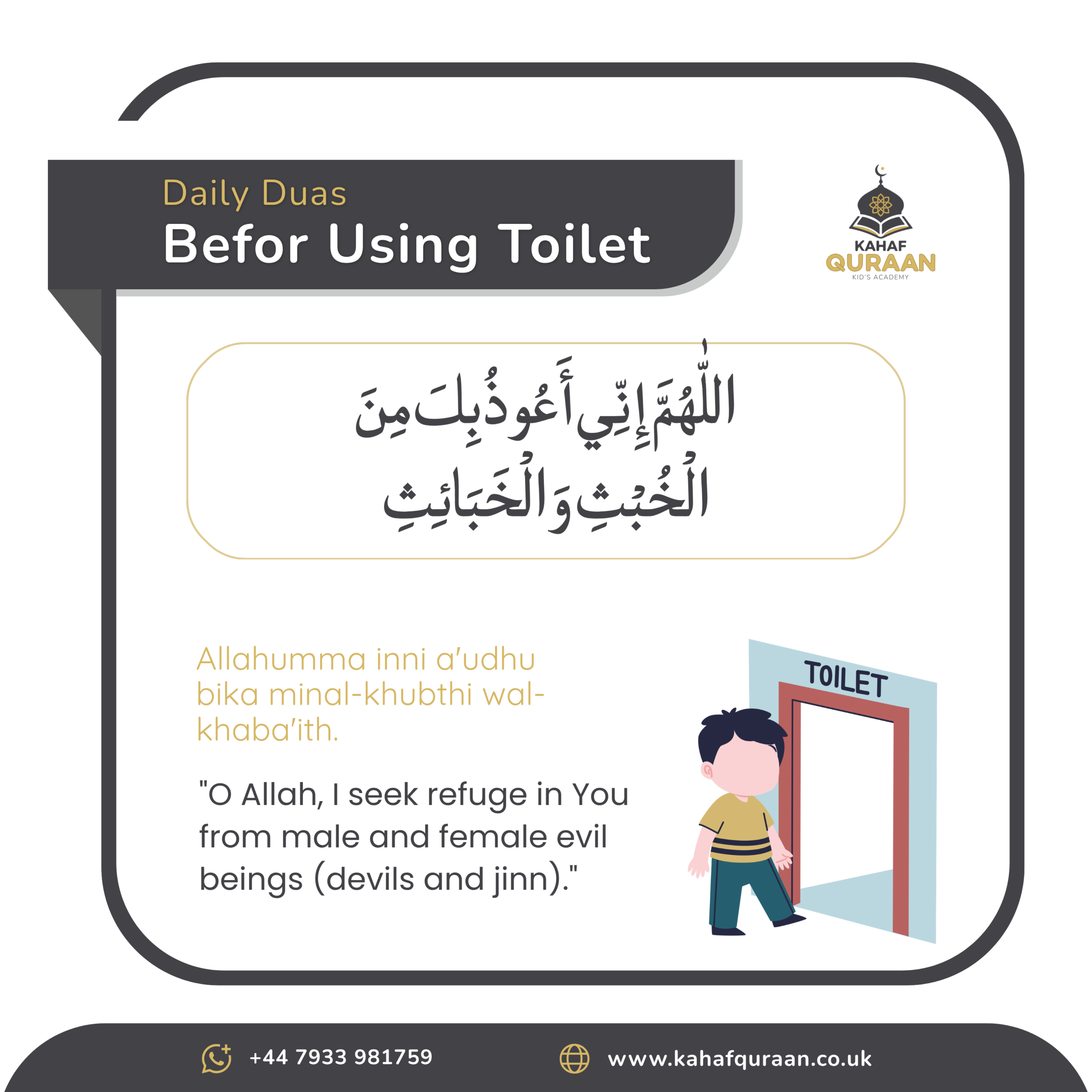
Dua Before Using Toilet Image
The image above can be used by parents for quick revision at home. Children often remember duas better when they see the words regularly, hear them from a teacher and repeat them in the right daily moment.
Transliteration and Meaning
Allahumma inni a udhu bika minal khubuthi wal khabaith.
Meaning: O Allah, I seek refuge in You from male and female devils.
When to Read Dua Before Using Toilet
Dua Before Using Toilet should be taught with its purpose, not only as a line to memorise. When children understand when a dua is read and what it means, they are more likely to use it naturally. Parents can read it aloud, ask the child to repeat softly and then explain the meaning in simple words.
For a helpful reference, parents can also check this trusted source. The goal is not to make learning heavy. The goal is to help children connect small duas with gratitude, cleanliness, faith, respect and reliance on Allah.
How to Teach Children
Start with one short section. Read slowly, let the child repeat, and do not correct every sound at once. If the child is young, the meaning can be explained in one sentence. If the child is older, the teacher can connect the dua to a real daily situation.
Kahaf Quraan tutors can include duas inside regular Quran classes, Islamic Studies lessons or short revision time. This helps children learn without feeling like they have a long list to memorise alone.
Parent tip
Put the image near a study area, revise for two minutes after class, and ask your child what the dua means before asking them to recite faster.
Daily Practice Tips
Read before entering
Read before entering helps make Dua Before Using Toilet part of a calm daily routine instead of something children only memorise once.
Keep the wording short
Keep the wording short helps make Dua Before Using Toilet part of a calm daily routine instead of something children only memorise once.
Teach privacy
Teach privacy helps make Dua Before Using Toilet part of a calm daily routine instead of something children only memorise once.
Teach cleanliness
Teach cleanliness helps make Dua Before Using Toilet part of a calm daily routine instead of something children only memorise once.
Revise with the image
Revise with the image helps make Dua Before Using Toilet part of a calm daily routine instead of something children only memorise once.
Make it a habit
Make it a habit helps make Dua Before Using Toilet part of a calm daily routine instead of something children only memorise once.
Related Duas and Classes
Families can continue with more daily duas, Kalimahs, Qaida, Quran reading and Tajweed through Kahaf Quraan. Start with 3 free trial classes, review the fees page, or ask questions through the contact page.
Parents who want a structured path can ask for a weekly plan that includes Quran reading plus two or three short duas. Small steady revision is usually better than memorising many duas at once and forgetting them later.
FAQs About Dua Before Using Toilet
What is Dua Before Using Toilet?
Dua Before Using Toilet is a short Islamic dua or faith statement that families can learn with meaning, revision and daily practice.
Can children learn this dua online?
Yes. A patient online teacher can help children read, repeat, understand the meaning and revise until it becomes familiar.
Should children learn the meaning too?
Yes. Memorising the words is good, but understanding the meaning helps children connect the dua with manners, faith and daily life.
Help Your Child Learn Duas with Meaning
Start with a patient online teacher and build daily Islamic learning step by step.
Start 3 Free Trial ClassesAsk a Question